Why AI Products Live or Die on Data Quality
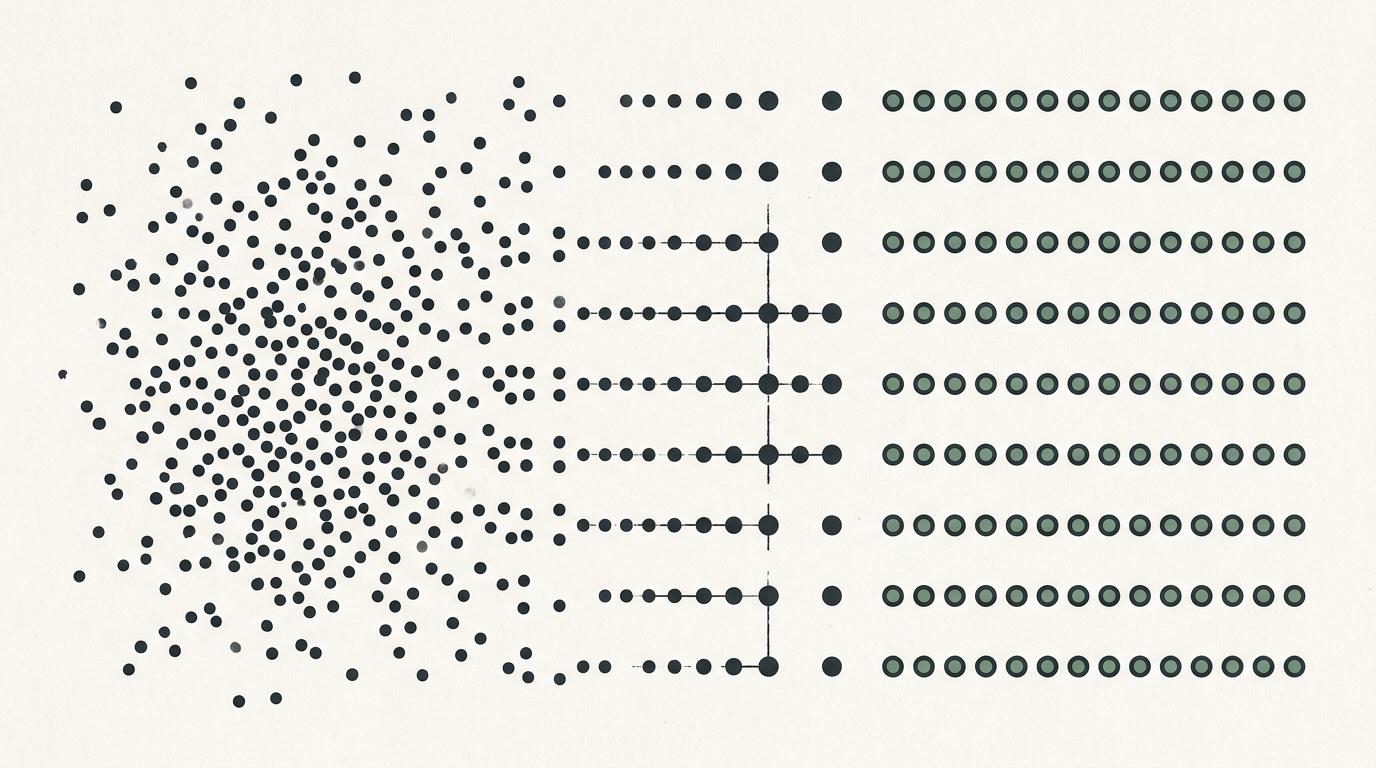
An AI product is only as good as the data underneath it — a strong model on weak data produces confident, wrong answers. I learned this building and integrating a database of 70M+ B2B records into something an AI-first product could actually search and act on.
TL;DR
- Model quality has a ceiling set by data quality. Bad data caps a good model.
- Volume is the easy part. I built 70M+ records; the value came from cleaning and matching them, not collecting them.
- Entity resolution is the make-or-break step. If the same company reads as twelve companies, every answer is wrong.
- A confident wrong answer costs more than a gap — especially in B2B outreach.
- Verification beats collection. Fewer trusted records beat more you have to second-guess.
Why data quality caps model quality
When an AI product retrieves from your data to answer, the answer inherits your data’s errors. This is the part that gets skipped in the rush to add an AI feature: teams upgrade the model and leave the data layer untouched, then wonder why the output is plausible but wrong.
Definition: grounding is feeding a model real records at answer time so it responds from your data instead of its training memory. Grounding only helps if the records are clean — grounding on bad data just makes wrong answers sound authoritative.
Volume was never the hard part
Collecting 70 million records barely registers on the difficulty scale; making them usable is the whole job. The work that decided whether the dataset was worth anything, in order:
- Entity resolution. The same company appears many ways — different spellings, suffixes, addresses. Collapsing those into one entity is the step everything else depends on.
- Normalization. Names, locations, and categories have to be consistent, or a search silently misses the right record.
- Verification. Stale contacts erode trust faster than missing ones. A wrong record has a direct, measurable cost downstream.
- Retrieval. All of the above only pays off if the right record comes back fast enough to use inside a real workflow.
Entity resolution is where AI data projects fail
If your system thinks one company is twelve, every count, every dedupe, and every AI answer built on top is unreliable. This is the least glamorous and most decisive part of a data-backed AI product. I spent far more time here than on any model integration, because it’s the layer that determines whether “grounded in our data” means anything.
Verification beats collection
In B2B, a wrong record has a real cost — a wasted send, a bounce, a damaged sender reputation — so I optimize for trust, not size. A bigger number looks better in a pitch; a cleaner number performs better in production. Fewer records I trust beat more I have to double-check, which is the same “usefulness over noise” instinct I apply when deciding which AI tools to build at all.
What this means if you’re adding AI to a product
Before upgrading the model, audit the data the model will stand on. The reliable move is boring: resolve entities, normalize fields, verify what goes stale, and only then wire in the model. This is the data foundation behind NexaPioneer, and the reason its bet is narrow — AI, applied all the way into B2B, on data that’s actually been cleaned.
FAQ
Did you really build the 70M+ record database yourself? Yes — I built and integrated it. The integration and cleanup were the parts that took real time; collection was the easy step.
Is a bigger dataset better for AI features? No, past a point. Accuracy matters more than size, because grounding a model on wrong data just produces confident wrong answers. Verification beats volume.
What’s the hardest part of a data-backed AI product? Entity resolution — recognizing that many differently-written records are the same entity. Get it wrong and every downstream count and AI answer is unreliable.
How is this used today? It’s the data foundation under NexaPioneer, which builds AI-first B2B tools. More on how I approach AI products overall is on the about page.